Friday, 24 October 2014

Utopia Case Study - Stylistic Influences & Post-production

Utopia utilises the notorious comic-book aesthetics throughout the series unlike any other TV series, this composition of colours creates an ambience of futuristic change. As this colour combination is unorthodox, people find the colours quite disturbing, unsettling especially within the context of Utopia.


The colour correction used in Utopia is extremely effective as it makes a clear contrast between the darker colours and the lighter colours.
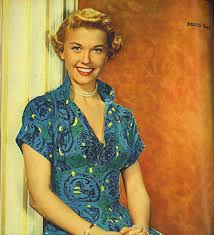
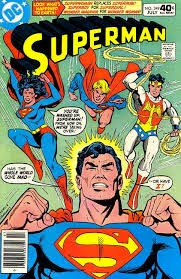
Conventionally TV uses the colour palette of Technicolor's - greens, blues and reds but Utopia uses colours of magenta, cyan and yellows. Munden, the director of Utopia has been influenced by 1950 Doris Day films with the yellows and turquoises. The main influence was the elements of comic-book look. I believe they use the different colour palette to create a type of escapism, a visual representation of diversion.
Within the post-production they use the grading software Nucoda Film Master. “As lenses and equipment get more sophisticated, film-makers are getting closer to a very ‘real’ look – but I wanted to do the opposite of that,” says Marc Munden.
He says that "he wanted to create a world that felt recognisable in its issues and characters, but also heightened and delirious.”

It was shot in Autumnal England, quite a bland, bleak time. Nature looks extremely bleak, this gives the editors a 'blank canvas' to create the ideal look.

Tuesday, 7 October 2014

Preliminary Task: Scriptwriting

In the pre-production for our preliminary task, Jake, Emma and I decided to compose a script as we are using actors external from our media class, this will overall increase the realism of the film, however we are currently having issues with  communication and organising the times and dates of shooting.
We decided a script was essential, no matter how little dialogue we are having in our project - it will not only increase our scriptwriting skills but also improve the quality of performance of our actors.
I will print these out and hand them out to our actors so they know what to say, when we shoot I will direct to get the desired look.
 

Sunday, 5 October 2014

Preliminary Project: Location Scout


In the task of making our short film we are still in  the pre-production section; Emma, Jake and I went on trip through our school. As I am new to this location we relied on Jake to give us a tour and take us to all possible locations.
The criteria was that the room had to be quite big to fit the table and could potentially be quite dark so that we could create a sinister feel to the scene. By having a darker room the mise-en-scene would be easier to create due to low-key lighting and by applying obvious conventions of thriller and horror.To do this we had to stay away from coloured rooms of Yellow and Green.

Preliminary Project: Story boarding

In the pre-production of every film, story boarding is key. We had been asked to story board our two minute clip, personally I found it difficult to plan what we would shoot in the future, especially as this is prior to the location scout.
We developed a narrative and some iconic shots to horror we could use to create an extremely tense Job Interview. 


Even though art isn't our strongest skill we made it as legible as possible however we used it to give us a strong overview of what to shoot, we gave it a quick description such as camera movement, diegetic and non-diegetic sounds and editing techniques.

We drew up some camera shots that we need to move the plot along and some shots that will create an extremely tense shot, we combined a variety of camera shots and editing styles such as a simple close up to a graphic match.


Chiefly, we will use the storyboards so we didn't forget what we was going to shoot and how we was going to shoot it, also, so we can shoot it all in one go and then move onto post-production without having to revisit the production of the film.


Sunday, 28 September 2014

Preliminary Project:  Brief


As part of our preliminary project we have been asked to create a piece of film which involves a character walking through a door and exchanging a piece of dialogue with a secondary character; sounds boring right? However, we created an interesting plot of 'An Interview with an Assassin' which will be fun to shoot and watch, however it has a lot of potential to be extremely cinematically tense.
We was given a set list of continuity techniques it had to include such as: 180 degree rule,  match on action and shot/reverse shot.


180 Degree Rule
The 180 degree rule is a continuity convention which keeps the camera at one side of the action. It gives the characters a horizontal relationship,an axis in which the camera stays along, it gives the audience better spatial awareness of the characters positions. Sometimes this convention is broken to cause disorientation or other effects; it causes great cinematic tension.


Match on action
Match on action is another continuity technique where editing is used to merge two shots to form a believable sequence of film due to the continuity of match on action. The seamless merge of to different shots will cause the audience to fall for the illusion of continuity due to the believable similarities of the shots, match on action is making the two shots (even though being shot separately) look as if they have been shot chronologically.

Reverse Shot
A reverse shot is used when two players are conversing; in order to convey to the audience the action of conversation the camera has to shoot them in opposite directions so that the audience assumes that they are looking at each other.

Preliminary Task
In this task I am in a group with Emma and Jake, collectively we decided to create a sinister 'Interview with an Assassin' as this plot could be took as satire horror, we will have to deal with the Scary Movie cliches and tackle them to create an immaculately tense film.

Sunday, 21 September 2014

Framing a Camerashot: Practice with stills


For our first ever short-assignment we were given the cameras to shoot certain camera shots but try and involve a narrative into it - at first, we was perplexed with what we were being asked to do but then me and two other students rushed off to start shooting our story.

Our first shot is (like always) an establishing shot, we used this shot to set the scene and immediately give the audience key information such as; genre, setting and plot. This shot reveals information that it is of course set in a school, I think this establishing shot did a good job of fulfilling its purpose as we was coming to grips with the new equipment.

Our next shot was a long shot of the hall, where our protagonist was revising, this long shot reveals deeper insight to the context such as type of school, it also homes down onto the plot a lot more and makes it more obvious to the audience by bringing a lot of attention to the main protagonists location.
The protagonist also looks isolated and alone in this shot, which can raise questions to the audience such as 'why?', this sparks tension.
We then tried to replicate visual lines on screen, it tells the audience where to look however I don't feel that in this shot I managed to pull that off.

This shot is a high angled medium shot, it is high angled so the protagonist instantly looks inferior, to convey his character accurately we made him look like all he wants to do is revise, using mis-en-scene in this shot (and the main reason this was a medium shot) we had to see his body language. His head is down and he wants to revise, this implies he is a weak character, coinciding with the high angle shot.


The over the shoulder shot shows what the protagonist can see. It brings attention to what he is doing as well as who is doing it. This shot shows what the protagonist is doing and brings attention the the background.

This is a point of view shot, similar to the over the shoulder shot however this shows a lot more empathy, this physically puts you in the character's shoes where as over the shoulder shot is a lot less personal.

This is a low angle shot which now reveals the antagonist, he is clearly a lot more violent and menacing in comparison to the protagonist, the two characters juxtapose due to the visual hierarchy and power shown by height on shot. The angle makes the man look taller than he is and makes the audience feel a lot smaller than the antagonist, this shows that he is more dominant.


Thank you for reading my blog.


Friday, 12 September 2014

Introduction to AS Foundation Media

Oliver Revill AS Foundation Portfolio

My name is Oliver Revill and I will be studying Media Studies at Tupton Hall School during 2014.
In this post I will be introducing myself and will be reflecting on my interest in Media

Prior to joining Tupton Hall School I had already achieved the grade A at GCSE Media level, the course was primarily focussed on creating a horror trailer, that then got entered into DAFTA Award Ceremony. It was a long process yet extremely fun, I am aware I have much but scratched the surface in the filmmaking business and I have a strong desire to learn more.

Filming and Media has been a very strong interest in mine for a couple of years now being extremely fond of watching and critiquing many of them, I then had my personal aspiration to create a film. I would eventually like to pursue a career in the film business whether that means being a filmmaker or for a production company.

As an avid film watcher, I especially like films such from Scott Pilgrim Vs. The World and Sucker punch to American History X and Memento - however my all time favourite film would be American Beauty.
TV series' are also a strong love of mine as an intensely embarrassing fan of Game of Thrones, It's Always Sunny In Philadelphia, Sherlock and Luther.

I am extremely interested in the majority of contemporary media sources such as; Twitter, Facebook, Instagram, YouTube and Reddit.

The task I will be doing on this course to produce the first 3 minutes to a thriller film, I will do a lot of research and try to create the best possible opening.

I look forward to produce this film and hopefully succeed in this task.